
The foundation of accurate lawn bowls delivery starts with proper grip technique. Professional players consistently use a relaxed fingertip grip where the middle finger is centered on the running surface, with no palm pressure, to achieve smooth release and consistent bias control.
Key Takeaway
-
Relaxed fingertip grip with middle finger centered on running surface is the primary technique used by professionals
-
Different grip styles (Conventional, Channel, Two-finger, Three-finger) suit different skill levels and green conditions
-
Over-gripping causes tension and jerky release – the most common mistake beginners make
What is the Best Lawn Bowls Grip Technique?
Primary Fingertip Grip: Middle Finger on Running Surface
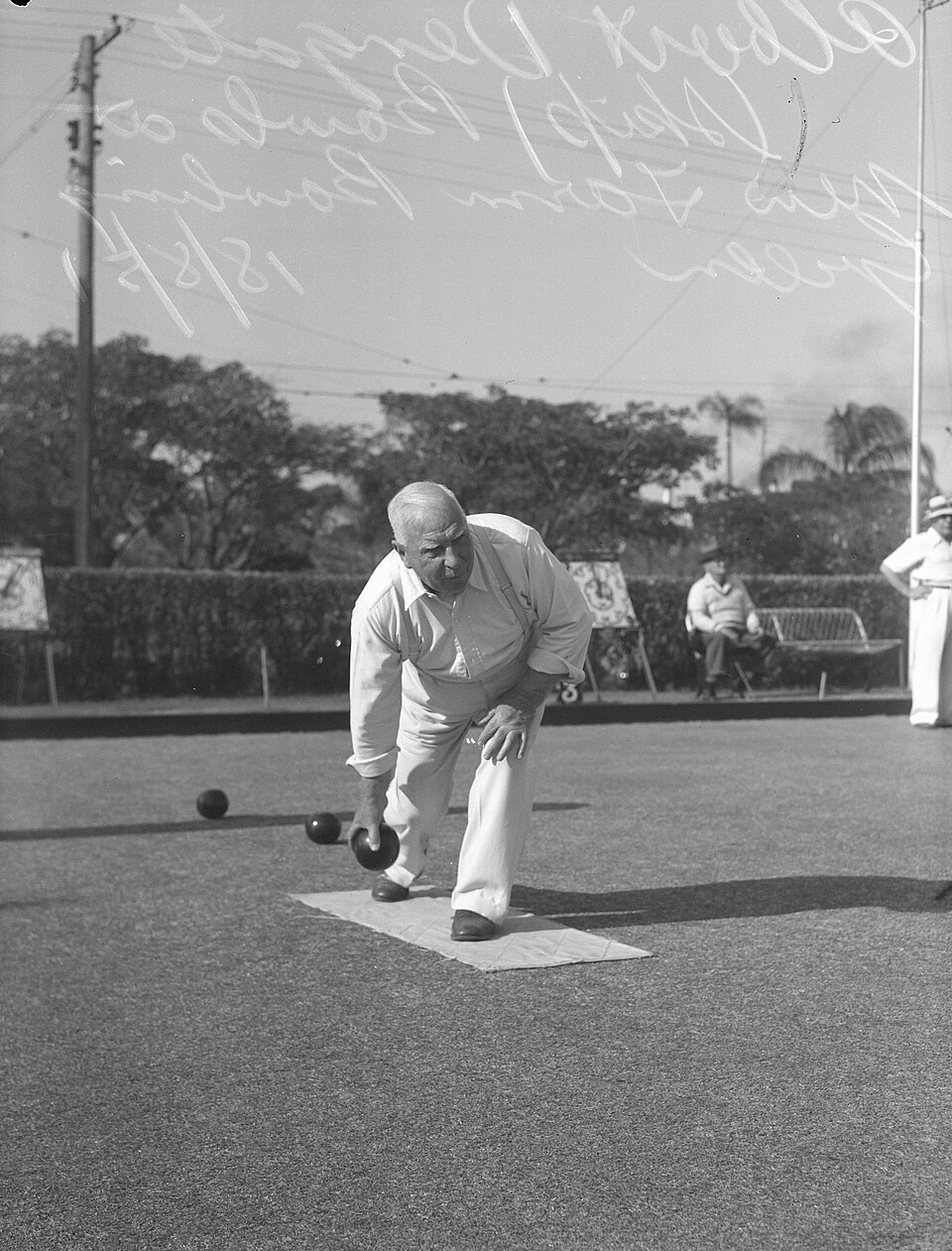
The cornerstone of professional lawn bowls delivery is the relaxed fingertip grip. This technique positions your middle finger directly on the center of the running surface, which is the bias side of the bowl. Your thumb supports the bowl from the side, while your other fingers wrap around naturally without applying pressure. The critical element is keeping your palm completely off the bowl – no palm contact means no friction during release.
This grip allows the bowl to roll off your fingertips smoothly, maintaining the intended bias path. Professional players like Mike Kernaghan and Shannon McIlroy demonstrate this technique in their instructional videos, showing how the bowl should feel like it’s resting on your fingertips rather than being held. The running surface alignment ensures the bowl’s bias works as designed, creating the predictable curve that’s essential for accurate shot placement.
Why Grip Pressure Matters: Relaxed vs. Tight Hold
-
Relaxed grip: Allows smooth release, maintains consistent bias, reduces tension in delivery arm
-
Tight grip: Causes muscle tension, leads to jerky release, disrupts bowl’s natural bias
-
Pressure adjustment: Increase slightly on fast greens for control, decrease on slow greens for feel
-
Grip agents: Use powder or rosin when hands are sweaty to maintain consistent pressure
The difference between a relaxed and tight grip can be the difference between a perfect shot and a complete miss. Over-gripping creates tension that travels up your arm, causing your delivery to become stiff and mechanical. This tension manifests as a jerky release where the bowl leaves your hand abruptly rather than rolling off smoothly. The towel drill is an effective fix – practice holding a rolled towel as you would a bowl, focusing on keeping your grip light enough that the towel could slip out if you weren’t careful.
Different Lawn Bowls Grip Styles and When to Use Them
Conventional Grip: Best for Beginners and Consistency
The conventional grip is the most accessible technique for new players. Your fingers are evenly spaced around the bowl’s circumference, with your thumb positioned on the side for support. This grip provides maximum stability and is excellent for developing consistent delivery mechanics. The even finger distribution helps beginners maintain control without worrying about complex finger positioning.
Most coaches recommend starting with the conventional grip because it builds confidence through reliability. The bowl feels secure in your hand, and the release is straightforward. As you develop your delivery, this grip helps establish the muscle memory needed for more advanced techniques. Many players continue using the conventional grip throughout their bowling career, especially on slower greens where maximum control is more important than subtle wrist action.
Channel Grip vs. Three-Finger Grip: Advanced Control Options
The channel grip involves placing your fingers into the bowl’s groove or channel, typically found on the bias side. This advanced technique provides enhanced precision by creating a more defined contact point with the running surface. The fingers lock into position, reducing lateral movement during delivery and improving shot accuracy, particularly on fast greens where small variations are magnified.
The three-finger grip uses your index, middle, and ring fingers to control the bowl, with your thumb and little finger providing minimal support. This configuration offers firm control while allowing subtle adjustments in release angle. The three-finger grip excels when you need to make fine adjustments to weight or line, as the additional contact points provide more nuanced control over the bowl’s trajectory.
Two-Finger Grip: Loose Wrist Freedom for Fluid Motion
The two-finger grip uses only your index and middle fingers to control the bowl, with your thumb providing side support. This minimalist approach maximizes wrist flexibility and creates a more fluid delivery motion. The reduced finger contact allows your wrist to move more freely through the delivery arc, which can be beneficial for generating subtle variations in shot shape.
This grip style is particularly effective for players who prefer a more natural, flowing delivery. The loose wrist freedom enables quick adjustments during the delivery motion and can help generate additional revolutions on the bowl when needed. However, it requires excellent hand-eye coordination and consistent practice to master, as the reduced contact points mean less inherent stability during the delivery motion.
Common Lawn Bowls Grip Mistakes and How to Fix Them
Over-Gripping: The #1 Delivery Killer
-
Symptoms: Tight forearm muscles, jerky release, inconsistent bias, bowl veering off target
-
Cause: Anxiety about control, lack of confidence, attempting to force accuracy
-
Fix: Practice with a rolled towel, focus on relaxed fingertips, use grip powder for security
-
Drill: Hold bowl with just enough pressure to prevent dropping – imagine holding a bird
Over-gripping is the most common delivery error across all skill levels. When you grip too tightly, you create tension that travels up your arm and into your shoulder, fundamentally altering your delivery mechanics. The bowl leaves your hand abruptly rather than rolling off smoothly, disrupting the bias and causing unpredictable results. Professional coaches consistently identify over-gripping as the primary obstacle to consistent performance.
Finger Alignment Errors: Misaligned Middle Finger Problems
Misalignment of your middle finger on the running surface causes the bowl to wobble during release, creating an inconsistent bias path. When your middle finger is off-center, the bowl doesn’t roll true, leading to unpredictable curves and missed shots. This error is particularly problematic because it’s often subtle – you might think your grip is correct when the middle finger is actually slightly offset.
The solution involves developing awareness of your finger positioning through deliberate practice. Before each delivery, take a moment to ensure your middle finger is centered on the running surface. Some players find it helpful to use visual markers on their bowls during practice to develop this awareness. The misalignment problem often stems from rushing your setup or not paying attention to finger placement during the grip phase.
Palm and Little Finger Mistakes to Avoid
-
Palm contact: Creates friction during release, disrupts smooth roll-off, alters bias path
-
Little finger use: Not designed for gripping, can cause instability, interferes with thumb position
-
Solution: Keep palm arched away from bowl, let little finger rest naturally without pressure
-
Common cause: Fear of dropping bowl, attempting to add stability through extra contact points
Using your palm to support the bowl is a fundamental error that disrupts the entire delivery process. Palm contact creates friction during the critical release phase, preventing the bowl from rolling off your fingertips smoothly. This friction can alter the bowl’s bias path and create inconsistent results. Similarly, using your little finger for additional grip support interferes with the proper thumb positioning and can create instability rather than the intended security.
The most surprising finding about lawn bowls grip techniques is that even small variations in finger pressure can dramatically affect shot accuracy. Professional players spend years refining their grip pressure to achieve the perfect balance between control and freedom. The key action step is to practice your grip with a focus on relaxation – hold a rolled towel as if it were a bowl, maintaining just enough pressure to prevent it from slipping. This simple drill develops the muscle memory for a relaxed, consistent grip that will transform your delivery accuracy.